
Introduction
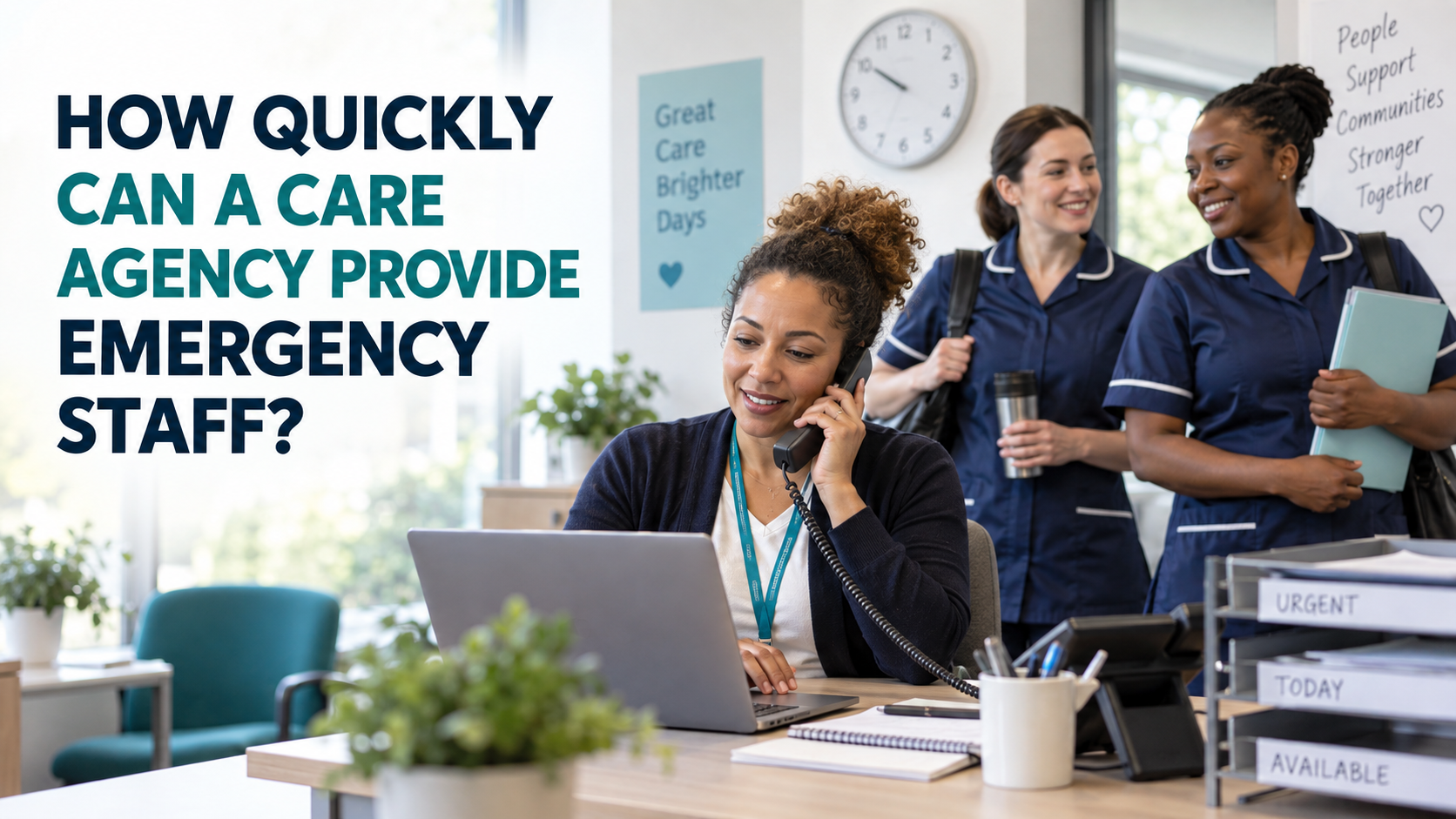
In the UK health and social care sector, continuity of care is paramount. However, emergencies and unforeseen staff shortages can occur at any time, making it crucial for care agencies to provide rapid solutions. Whether due to sickness, last-minute cancellations, or sudden increases in care demand, the ability of a care agency to supply emergency staff quickly can significantly impact service users' wellbeing and safety.
Understanding Emergency Staffing in Care Agencies
Emergency staffing refers to the rapid deployment of qualified care professionals to fill unexpected gaps in rosters. These situations can arise in home care, residential care homes, hospitals, or specialised care settings. Care agencies typically maintain a pool of on-call or bank staff ready to be deployed when emergency cover is needed.
Common Scenarios Requiring Emergency Staff
- Staff sickness or family emergencies
- Sudden client discharge requiring increased care
- Unplanned leave or shift cancellations
- Outbreaks of illness impacting multiple staff members
- Regulatory or inspection requirements demanding full staffing
How Quickly Can Emergency Staff Be Provided?
The speed at which a care agency can provide emergency staff depends on several factors, including the agency's size, location, available resources, and the complexity of the care required.
Typical Response Times
- Within a Few Hours: Many established care agencies advertise the ability to provide staff within 2 to 4 hours for urgent needs. This rapid response is often possible when the agency has a reliable, accessible bank of local staff immediately available.
- Same-Day Deployment: Some emergency placements may take overnight or longer depending on shift patterns, the need for background checks, or specific clinical competencies.
- Immediate Response: In critical situations, such as sudden hospital discharge or safeguarding concerns, established agencies with robust contingency plans might mobilise staff within 1-2 hours.
Factors Affecting Response Times
- Staff Availability: Consistent access to a qualified pool of healthcare assistants, nurses, or carers in the relevant location is vital.
- Client Requirements: Complex care needs requiring registered nurses or specialised training may lengthen response times.
- Compliance Checks: Criminal Records Bureau (DBS) checks, right-to-work verification, and safeguarding training must be in place before deployment.
- Geographical Location: Urban areas often see faster response times compared to rural or remote locations due to higher staff density.
- Agency Efficiency: Sophisticated scheduling software, skilled coordinators, and good communication channels improve turnaround speed.
How NGC Care Supports Emergency Staffing Needs
At NGC Care, we understand the pressures that emergency staffing shortages place on care providers and recipients. Our dedicated team prioritises rapid recruitment and deployment to ensure minimum disruption to care services.
Our Approach Includes:
- Extensive Talent Pools: We maintain a large database of vetted and experienced healthcare professionals across the UK.
- Thorough Pre-Screening: All candidates are fully compliant with DBS checks, qualifications, and training before being available for emergency work.
- Efficient Matching: Using advanced technology and expert coordinators, we quickly match client needs with the right candidates.
- Flexible Contracts: Our bank and temporary staff can be deployed at short notice, from hours to days.
- 24/7 Support: Client and candidate dedicated support lines operate round-the-clock to manage urgent requests effectively.
Best Practices for Care Providers to Facilitate Emergency Staffing
While care agencies play a crucial role, providers can also take steps to ensure smoother emergency staffing:
- Plan Ahead: Maintain relationships with reputable agencies with proven emergency response capabilities.
- Clear Communication: Provide detailed information about care needs, shift timings, and any special requirements upfront.
- Flexible Scheduling: Build some flexibility into rotas to accommodate emergency cover.
- Staff Retention: Invest in staff wellbeing and incentives to reduce unexpected absences.
- Regular Training: Ensure in-house staff can temporarily cover multiple roles if necessary.
Conclusion
Emergency staffing is an inevitable challenge in the health and social care sector, but with the right care agency partner, service disruption can be minimised. Agencies like NGC Care are committed to rapid, safe, and effective deployment of emergency staff, ensuring vulnerable individuals receive the care they deserve without delay. By understanding the factors influencing response times and fostering strong agency-provider relationships, care settings can navigate staffing emergencies with confidence and compassion.