
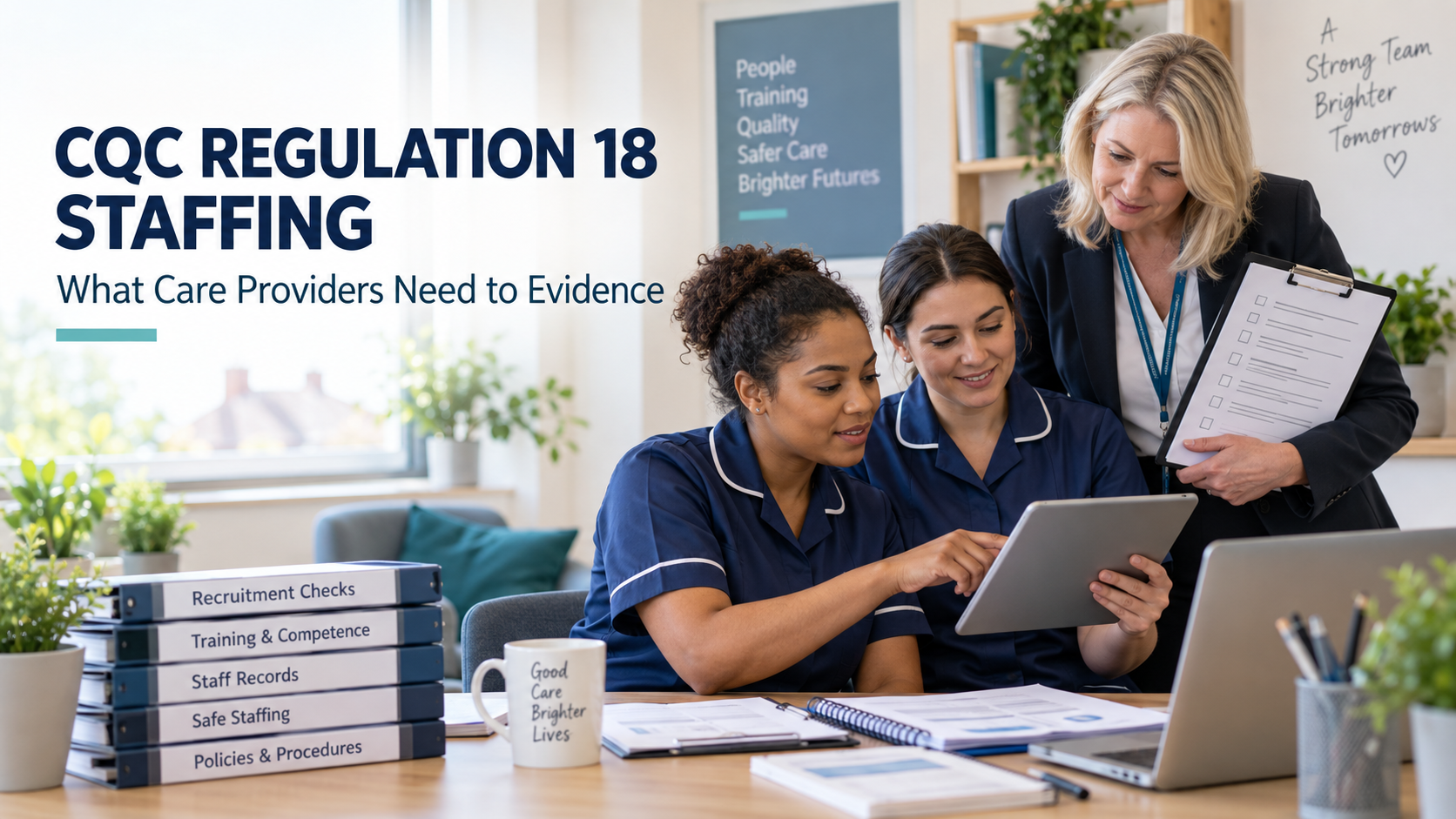
Understanding CQC Regulation 18 Staffing
The Care Quality Commission (CQC) outlines essential standards for health and social care providers in England, with Regulation 18 focusing specifically on staffing. This regulation ensures that care providers have sufficient numbers of suitably qualified, competent, and experienced staff to meet the needs of people using their services. In a sector where quality and safety are paramount, demonstrating compliance with Regulation 18 is vital.
What Does Regulation 18 Require?
Regulation 18 is primarily concerned with two key elements:
- Sufficient staffing levels: Providers must ensure that there are enough staff on duty at all times to meet people’s needs safely and effectively.
- Staff competence and qualifications: Staff must be properly trained, supported, and capable of delivering high-quality care.
Failing to evidence adequate staffing can result in compliance failures, impacting a provider’s rating and ability to operate.
Key Evidence Care Providers Need to Demonstrate Compliance
To satisfy CQC inspectors during an inspection, providers need to prepare robust evidence showing how they meet Regulation 18 requirements. Below are the crucial areas to focus on:
1. Staffing Levels and Deployment
Care providers must be able to show how staffing numbers are calculated, monitored, and adjusted. Evidence includes:
- Staffing rotas and shift patterns: These should reflect actual hours worked and ensure appropriate cover for all care shifts.
- Dependency assessments: Tools or methods used to assess the needs of service users to determine the number of staff required.
- Records of staff availability and absence management: Including sick leave, annual leave, and contingency plans for unexpected shortages.
2. Staff Qualifications and Skills
Demonstrating workforce competence is a vital part of Regulation 18 compliance. Providers should keep updated records showing:
- Qualifications and certificates: Copies of relevant training, such as NVQs, safeguarding, first aid, or specific clinical skills.
- Training matrices: Tracking ongoing professional development and mandatory training completion.
- Induction and probation documentation: Records of how new staff are prepared and assessed before working independently.
3. Supervision and Support
The CQC looks for evidence that staff are supported to perform well. This includes:
- Records of regular supervision and appraisals: Documentation showing constructive feedback, performance reviews, and individual development plans.
- Staff meetings and communications: Evidence of forums enabling staff to raise concerns, share best practice, and improve care delivery.
- Support mechanisms: Access to mentoring, coaching, or counselling services to maintain workforce wellbeing.
4. Recruitment and Retention Practices
Providers must show how they recruit suitable staff and minimise turnover, both relevant to maintaining safe staffing:
- Pre-employment checks: Detailed records of DBS checks, references, and eligibility to work in the UK.
- Recruitment processes: Policies and procedures ensuring transparency and fairness in hiring.
- Retention strategies: Initiatives to improve staff satisfaction, such as career progression opportunities and work-life balance measures.
5. Monitoring and Review
Ongoing evaluation of staffing effectiveness is essential. Providers should present:
- Audits and reviews: Regular analysis of staffing levels against service user needs, incident reports, and feedback.
- Action plans: Documentation of how identified issues are addressed, including changes to staffing or training.
- Engagement with stakeholders: Evidence of consultation with service users, carers, and staff about staffing arrangements.
Practical Tips to Stay Compliant with Regulation 18
Beyond gathering the right evidence, care providers can proactively strengthen compliance by:
- Implementing electronic rostering and workforce management systems to accurately track staffing.
- Running regular competency assessments and refresher training tailored to service user needs.
- Encouraging a culture of openness where staff feel comfortable reporting concerns or suggesting improvements.
- Maintaining clear, accessible policies on staffing designed in line with CQC guidelines.
- Working closely with recruitment agencies, like NGC Care, specialising in health and social care, to secure qualified and reliable staff swiftly.
Conclusion
CQC Regulation 18 is fundamental in ensuring the safety and quality of care through sufficient and competent staffing. By systematically gathering and maintaining clear, comprehensive evidence, care providers can confidently demonstrate compliance during inspections and foster a workforce equipped to meet the complex needs of those in their care. For providers aiming to strengthen their staffing practices, partnering with experienced recruitment specialists and prioritising staff development remain key strategies to success.